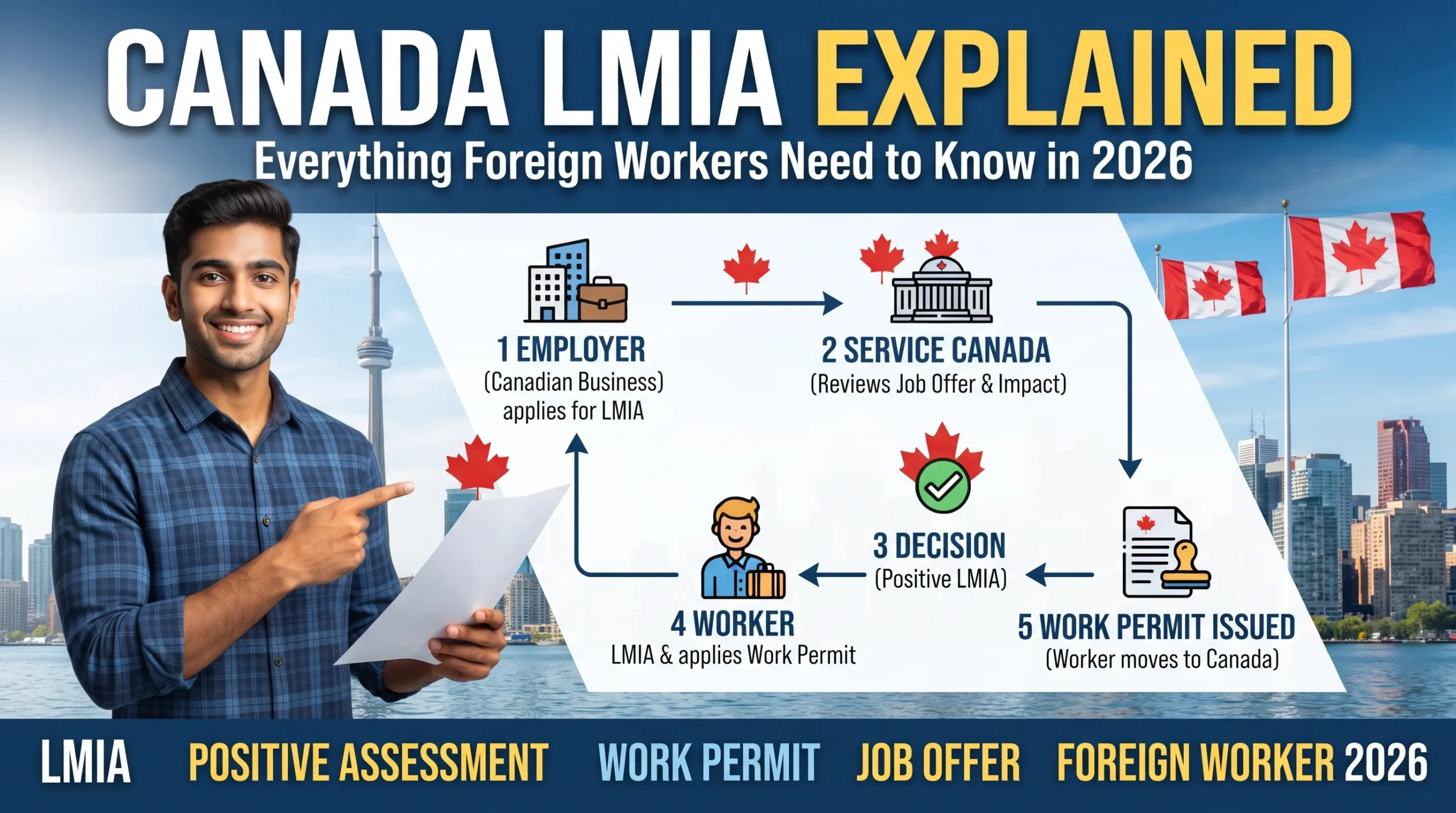
If you are planning to work in Canada, you have probably come across the term LMIA, short for Labour Market Impact Assessment. Understanding how the LMIA process works is essential because it plays a major role in many employer-sponsored work permits under Canada’s Temporary Foreign Worker Program (TFWP).
In simple terms, an LMIA is a document that a Canadian employer may need before hiring a foreign worker. A positive LMIA confirms that there is a genuine labour shortage and that no Canadian citizen or permanent resident is available to fill the position. It also allows eligible employers to support a foreign worker’s work permit application.
Although many jobs still require an LMIA, not every Canadian work permit does. Some workers qualify under LMIA-exempt programs, such as certain international agreements, intra-company transfers, or the International Mobility Program. Knowing the difference can help you choose the right pathway and avoid unnecessary delays.
This comprehensive guide explains everything foreign workers need to know about the Canadian LMIA system in 2026, including the different LMIA streams, how the process works, employer responsibilities, common industries that hire through LMIA, and how an approved LMIA can help you begin your career in Canada.
LMIA Overview
| Category | Details |
|---|---|
| Country | Canada |
| Program | Labour Market Impact Assessment (LMIA) |
| Managed By | Employment and Social Development Canada (ESDC) / Service Canada |
| Purpose | To determine whether hiring a foreign worker will have a positive or neutral impact on Canada’s labour market |
| Who Applies? | Canadian Employer |
| Worker Applies? | No, the foreign worker does not apply for the LMIA |
| Required for | Many employer-specific work permits |
| Processing Authority | Service Canada |
| Validity | Varies depending on the approved application and program stream |
What Is an LMIA?
A Labour Market Impact Assessment (LMIA) is an official assessment issued by Employment and Social Development Canada (ESDC).
Its purpose is to determine whether a Canadian employer has demonstrated a genuine need to hire a foreign worker because qualified Canadian citizens or permanent residents are not available for the position. A positive LMIA supports the employer’s ability to hire a foreign worker, while a negative LMIA means the employer cannot use that application to hire through the LMIA process.
An LMIA is generally the employer’s responsibility. The foreign worker does not apply for the LMIA directly. Instead, once an employer receives a positive LMIA (where required), the worker may use it—along with the job offer and other required documents—to apply for an employer-specific work permit.
Why LMIA Matters for Foreign Workers
Understanding LMIA is important because it affects whether you can legally accept many employer-sponsored jobs in Canada.
Provides Access to Employer-Sponsored Jobs
Many Canadian employers can only hire foreign workers after obtaining a positive LMIA. Without this approval, they may not be able to sponsor workers for many positions under the Temporary Foreign Worker Program.
Supports Your Work Permit Application
A positive LMIA is often one of the key documents required when applying for an employer-specific Canadian work permit.
It helps demonstrate that:
- A legitimate job offer exists.
- The employer has followed Canadian hiring requirements.
- The position meets program rules.
Protects Canada’s Labour Market
The LMIA process helps ensure that employers first make reasonable efforts to recruit Canadian citizens and permanent residents before hiring internationally.
This system is designed to balance employer labour needs with opportunities for domestic workers.
Helps Reduce Fraud
Because employers must meet specific requirements before receiving a positive LMIA, the process provides safeguards against some forms of fraudulent recruitment.
Foreign workers should still verify job offers carefully and avoid anyone requesting payment in exchange for a guaranteed LMIA or work permit.
Types of LMIA
Canada offers several LMIA streams depending on the type of job and employer needs.
High-Wage Stream
This stream applies when the offered wage is at or above the applicable provincial or territorial wage threshold.
Employers under this stream may need to demonstrate:
- Labour shortages
- Recruitment efforts
- A transition plan to reduce long-term reliance on foreign workers
Updated wage thresholds take effect periodically and should be checked before an application is submitted.
Low-Wage Stream
The Low-Wage Stream is intended for positions where the wage falls below the applicable threshold.
Employers must comply with additional program requirements, which may include transportation, housing obligations in some cases, and other worker protections depending on the occupation and stream. Recent program updates also introduced revised recruitment requirements for some low-wage LMIA applications.
Agricultural Stream
Canadian farms and agricultural employers may use this stream to recruit foreign workers for eligible agricultural occupations when local labour shortages exist.
Common occupations include:
- Farm workers
- Greenhouse workers
- Livestock workers
- Crop harvest workers
Seasonal Agricultural Worker Program (SAWP)
The SAWP allows eligible employers to hire seasonal agricultural workers from participating countries under specific agreements.
This program has its own eligibility requirements and operational rules.
Global Talent Stream
The Global Talent Stream helps eligible employers hire highly skilled international workers in designated occupations more quickly.
It is designed to support Canada’s innovation and technology sectors and often benefits from faster LMIA processing times than some other streams.
Permanent Residence Support LMIA
In some situations, employers may apply for an LMIA to support a foreign worker’s application for permanent residence through eligible immigration pathways.
Specific program requirements apply, including recruitment obligations and eligibility criteria.
How the LMIA Process Works
Although the exact process varies by stream, the general steps are similar.
Step 1: Employer Identifies a Labour Need
The employer determines that they cannot fill the position with available Canadian citizens or permanent residents.
Step 2: Recruitment Efforts
Before applying for many LMIA streams, employers must advertise the position and demonstrate genuine efforts to recruit within Canada.
Recruitment requirements vary depending on the stream and occupation.
Step 3: Submit the LMIA Application
The employer submits the LMIA application to Service Canada along with the required supporting documents and applicable fees.
Step 4: Government Assessment
Service Canada reviews the application to determine whether hiring a foreign worker is justified.
The assessment considers factors such as:
- Labour shortages
- Recruitment efforts
- Wages and working conditions
- Employer compliance history
- Impact on Canada’s labour market
Step 5: LMIA Decision
If approved, the employer receives a positive LMIA.
The foreign worker can then use the LMIA, together with the job offer and other required documents, to apply for an employer-specific work permit, where applicable.
Benefits of LMIA-Based Jobs
Many foreign workers choose LMIA-supported jobs because they provide structured employment opportunities with employers who have completed the required hiring process.
Potential benefits include:
- Access to legitimate employer-sponsored jobs
- Competitive wages that meet program requirements
- Legal authorization to work for the sponsoring employer
- Opportunities across multiple industries
- Possible pathways that may support future immigration, depending on the worker’s circumstances and the applicable immigration program
Common Industries That Hire Through LMIA
Labour shortages vary across Canada, but LMIA-supported hiring is commonly seen in sectors such as:
- Agriculture and farming
- Truck driving and transportation
- Construction
- Hospitality and tourism
- Food processing
- Manufacturing
- Healthcare and caregiving
- Retail (where eligible)
- Seafood processing
- Skilled trades
- Warehousing and logistics
The availability of LMIA-supported jobs depends on labour market conditions, employer needs, and current government policies.
LMIA Eligibility Requirements
Although the Canadian employer applies for the Labour Market Impact Assessment (LMIA), both the employer and the foreign worker must meet certain requirements before a work permit can be approved.
Requirements for Employers
Canadian employers generally need to:
- Operate a legitimate business in Canada.
- Demonstrate a genuine need to hire a foreign worker.
- Make reasonable efforts to recruit Canadian citizens and permanent residents before hiring internationally (where required).
- Offer wages and working conditions that meet applicable federal and provincial requirements.
- Comply with the Temporary Foreign Worker Program (TFWP) rules.
- Submit all required supporting documents with the LMIA application.
Depending on the LMIA stream, employers may also need to provide additional information, such as a transition plan or details about transportation and housing arrangements.
Requirements for Foreign Workers
Foreign workers should generally:
- Meet the qualifications listed in the job advertisement.
- Have the education, training, licences, or certifications required for the occupation (where applicable).
- Meet any language requirements specified by the employer.
- Be admissible to Canada under immigration laws.
- Apply for the appropriate work permit after receiving the necessary documents from the employer.
Meeting the minimum requirements does not automatically guarantee work permit approval.
Employer Responsibilities
Employers approved to hire foreign workers through an LMIA have ongoing legal responsibilities.
These responsibilities help ensure fair treatment of employees and compliance with Canadian labour standards.
Fair Wages
Employers must generally pay the wage approved for the LMIA and comply with applicable employment standards.
Safe Working Conditions
Workers should receive a safe workplace that follows federal, provincial, and territorial occupational health and safety regulations.
Employment Agreement
Many employers provide a written employment agreement that outlines:
- Job title
- Duties
- Salary
- Working hours
- Benefits
- Leave entitlements
- Employment conditions
Workers should carefully review the agreement before accepting the position.
Compliance with Government Rules
Employers participating in the Temporary Foreign Worker Program may be subject to inspections and compliance reviews.
Failure to follow program rules can result in penalties or restrictions on hiring foreign workers.
Documents Required
The documents required depend on the occupation, work permit category, and immigration program.
Foreign workers commonly need:
- Valid passport
- Job offer letter
- Copy of the positive LMIA (if required)
- Employment contract (where applicable)
- Educational certificates
- Professional licences (for regulated occupations)
- Resume or CV
- Police certificates (if requested)
- Medical examination results (if required)
- Proof of work experience
- Passport-sized photographs
- Any additional documents requested by Immigration, Refugees and Citizenship Canada (IRCC)
Always ensure your documents are accurate, complete, and up to date before submitting a work permit application.
Step-by-Step Work Permit Process
Once an employer receives a positive LMIA, the foreign worker can begin the work permit application process.
Step 1: Receive the Job Offer
The employer provides:
- Official job offer
- LMIA number or approved LMIA documentation (where required)
- Employment agreement
Step 2: Gather Supporting Documents
Prepare all required documents before beginning the application.
Double-check:
- Passport validity
- Educational records
- Employment history
- Language documents (if required)
Step 3: Submit the Work Permit Application
Apply through the appropriate Immigration, Refugees and Citizenship Canada (IRCC) process.
Application procedures vary depending on:
- Country of residence
- Work permit category
- Whether you are applying from inside or outside Canada
Step 4: Complete Biometrics
Applicants from many countries must provide fingerprints and a photograph after submitting their application.
Step 5: Medical Examination (If Required)
Some occupations and applicants from certain countries must complete an immigration medical examination performed by an approved panel physician.
Step 6: Wait for a Decision
Processing times vary depending on:
- Country
- Visa office
- Application volume
- Work permit type
Applicants should avoid making travel arrangements until a final decision has been issued.
LMIA Processing Times
There is no fixed processing time for every LMIA application.
The timeline depends on factors such as:
- LMIA stream
- Occupation
- Application quality
- Seasonal demand
- Government workload
Some applications are processed more quickly than others, particularly where expedited processing is available under specific program streams. Employers and applicants should check the latest official processing information before planning their timelines.
Common Reasons for LMIA Refusal
Not every LMIA application is approved.
Common reasons for refusal include:
Insufficient Recruitment Efforts
If the employer cannot demonstrate adequate efforts to recruit Canadian citizens or permanent residents where required, the application may be refused.
Incorrect Wage Offer
Offering wages below the required rate for the occupation or region can affect approval.
Incomplete Documentation
Missing forms or supporting documents may delay processing or result in refusal.
Employer Non-Compliance
Employers with a history of violating Temporary Foreign Worker Program rules may be refused participation.
Labour Market Conditions
If Service Canada determines that hiring a foreign worker would have a negative impact on the Canadian labour market, the application may not be approved.
Tips to Avoid LMIA Scams
Unfortunately, fraudulent job offers and fake LMIA documents target many international job seekers.
Protect yourself by following these guidelines:
Never Pay for an LMIA
The employer is responsible for LMIA application fees. Be cautious if someone asks you to pay for an LMIA or guarantees approval.
Verify the Employer
Before accepting a job offer:
- Research the company.
- Confirm contact details.
- Check whether the business has a legitimate online presence.
- Ensure the offer matches Canadian employment standards.
Watch for Unrealistic Promises
Be cautious of advertisements that claim:
- Guaranteed visas
- Guaranteed permanent residence
- Instant work permits
- Extremely high salaries for entry-level jobs
Legitimate employers cannot guarantee immigration outcomes.
Use Official Government Information
Always verify immigration and work permit requirements using official Canadian government resources.
Avoid relying solely on information shared through social media or unofficial websites.
How to Find Genuine LMIA Jobs
Finding a legitimate employer takes time and careful research.
The following strategies can help.
Search Reputable Job Boards
Many employers advertise positions on recognized Canadian employment websites and provincial job portals.
Use keywords such as:
- LMIA available
- Employer-sponsored jobs
- Temporary Foreign Worker Program
- Foreign worker opportunities
Read each job description carefully to determine whether LMIA support is actually offered.
Apply Directly to Employers
Many Canadian companies publish vacancies on their official careers pages.
Submitting applications directly can reduce the risk of recruitment scams.
Work with Licensed Recruitment Agencies
Some employers use recruitment agencies to identify qualified international candidates.
Before working with an agency, verify that it operates legally and complies with the relevant provincial requirements.
Customize Your Resume
Tailor your resume to each job by highlighting:
- Relevant work experience
- Certifications
- Language skills
- Technical qualifications
- Achievements
A targeted application is often more effective than sending the same resume to multiple employers.
LMIA vs. LMIA-Exempt Work Permits
Not every foreign worker in Canada needs an LMIA. Understanding the difference between LMIA-required and LMIA-exempt work permits can help you identify the most appropriate immigration pathway.
| LMIA-Required Work Permit | LMIA-Exempt Work Permit |
|---|---|
| Requires a positive LMIA from the employer (in most cases) | Does not require an LMIA |
| Usually processed through the Temporary Foreign Worker Program (TFWP) | Usually processed through the International Mobility Program (IMP) or another exemption |
| Employer must demonstrate a labour shortage where required | Employer does not need to prove a labour shortage |
| Common in agriculture, trucking, hospitality, caregiving, food processing, construction, and manufacturing | Common for intra-company transfers, certain international agreements, open work permits, and other exemption categories |
| Employer-specific work permit | May be employer-specific or open, depending on the program |
The correct pathway depends on your occupation, employer, nationality, qualifications, and the immigration program you qualify for.
Frequently Asked Questions (FAQs)
1. What does LMIA stand for?
LMIA stands for Labour Market Impact Assessment. It is an assessment that determines whether a Canadian employer can hire a foreign worker for a specific position.
2. Who applies for the LMIA?
The Canadian employer applies for the LMIA through Employment and Social Development Canada (ESDC). Foreign workers do not submit the LMIA application themselves.
3. Does every Canadian work permit require an LMIA?
No. Many work permits require an LMIA, while others are LMIA-exempt under the International Mobility Program or other immigration pathways.
4. How long does LMIA processing take?
Processing times vary depending on the LMIA stream, occupation, application quality, and government workload. Applicants should check the latest official processing times before planning their move.
5. Can I apply for a work permit without a job offer?
For most employer-specific work permits that require an LMIA, you generally need a valid job offer. However, some open work permits and LMIA-exempt programs have different eligibility requirements.
6. Do I have to pay for the LMIA?
No. Employers are responsible for the LMIA application fee. You should be cautious if someone asks you to pay for an LMIA or guarantees approval.
7. Can an LMIA help with permanent residence?
In some situations, an LMIA-supported job offer may strengthen eligibility under certain Canadian immigration programs. However, an LMIA alone does not guarantee permanent residence.
8. Can I change employers after arriving in Canada?
If you hold an employer-specific work permit, you generally cannot start working for a different employer until you receive authorization under the applicable immigration rules.
9. Which industries commonly hire through LMIA?
Industries that frequently recruit foreign workers through LMIA-supported pathways include:
- Agriculture
- Trucking
- Construction
- Hospitality
- Food processing
- Manufacturing
- Healthcare
- Warehousing
- Seafood processing
- Skilled trades
Hiring trends vary depending on labour market needs.
10. How can I avoid fake LMIA job offers?
To protect yourself:
- Apply through legitimate employers.
- Verify company information.
- Never pay for an LMIA.
- Review official Canadian immigration guidance.
- Be cautious of guaranteed visa or job promises.
Final Thoughts
Understanding the Labour Market Impact Assessment (LMIA) is one of the most important steps for anyone planning to work in Canada through an employer-sponsored pathway. The LMIA process is designed to help Canadian employers address genuine labour shortages while protecting opportunities and working conditions for Canadian citizens and permanent residents.
Although the process may appear complex at first, knowing how it works can help you make informed decisions, avoid common mistakes, and recognize legitimate employment opportunities. Remember that the employer—not the foreign worker—is responsible for obtaining the LMIA where one is required. Once a positive LMIA is issued, eligible foreign workers can continue with the appropriate work permit application process.
It is also important to remember that not all Canadian jobs require an LMIA. Some workers qualify through LMIA-exempt pathways under the International Mobility Program or other immigration categories. Understanding the difference between these options can help you choose the pathway that best matches your qualifications and career goals.
Above all, protect yourself from recruitment fraud. Never pay for an LMIA, carefully verify every job offer, and rely on official Canadian government information when planning your move. With proper preparation, a genuine employer, and a clear understanding of the process, an LMIA-supported job can be an excellent starting point for building your career in Canada.