Unskilled Jobs in Canada for Foreigners 2026 (With and Without LMIA) – Visa Sponsorship Guide

Canada remains one of the top destinations for foreign workers in 2026, especially for those seeking unskilled and semi-skilled jobs with visa sponsorship. Due to ongoing labor shortages across multiple industries, Canadian employers continue to hire international workers under different immigration and work permit programs.
If you are from India, Pakistan, Nigeria, Kenya, Ethiopia, the Philippines, Indonesia, or any other country and looking for legal employment in Canada, this updated 2026 guide explains everything you need to know — including LMIA and non-LMIA options, visa pathways, salary expectations, job sectors, and how to apply.
Overview – Unskilled Jobs in Canada 2026
- Country: Canada
- Job Type: Unskilled / Semi-Skilled
- Education Required: Usually not mandatory (High School preferred)
- Experience Required: Not always required
- Age Requirement: 18+
- Visa Sponsorship: Available (LMIA & selected non-LMIA categories)
- Average Salary (2026): CAD 32,000 – CAD 48,000 per year
- Hourly Wage: CAD 16 – CAD 24 per hour
Minimum wages have increased significantly across provinces, and many entry-level workers now earn well above CAD 20,000 annually.
Why Canada Needs Unskilled Workers in 2026
Canada continues to face workforce shortages in:
- Construction
- Hospitality & Restaurants
- Retail & Supermarkets
- Agriculture & Food Processing
- Warehousing & Logistics
- Transportation & Delivery
With over hundreds of thousands of vacancies across provinces, employers actively recruit foreign workers where local labor supply is insufficient.
What is LMIA?
LMIA (Labour Market Impact Assessment) is a document that Canadian employers must obtain before hiring most foreign workers. It proves that no Canadian citizen or permanent resident is available to fill the position.
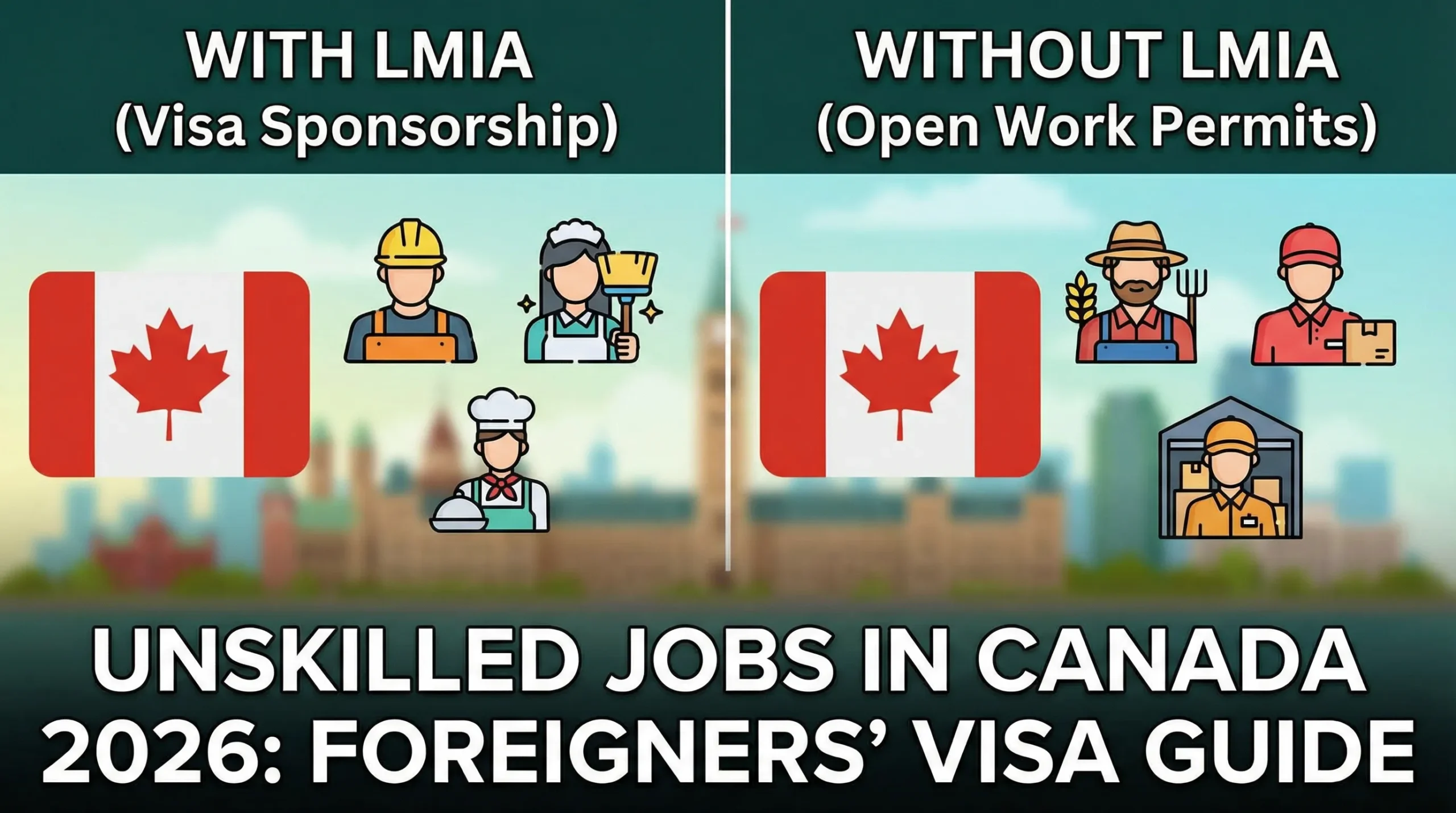
Jobs With LMIA
Most unskilled jobs require LMIA approval under the Temporary Foreign Worker Program (TFWP).
Jobs Without LMIA
Some categories may be LMIA-exempt under:
- International agreements
- Certain provincial programs
- Open work permits (spousal, bridging, etc.)
However, most first-time foreign unskilled workers apply through LMIA-supported offers.
Immigration Pathways for Unskilled Workers (2026)
Several programs allow foreign workers to enter Canada:
1. Temporary Foreign Worker Program (TFWP)
Most common pathway for unskilled workers with LMIA-based job offers.
2. Provincial Nominee Programs (PNP)
Some provinces nominate semi-skilled workers for permanent residency.
3. Atlantic Immigration Program
For workers in Atlantic provinces like Nova Scotia and New Brunswick.
4. Agri-Food Pilot Program
For farm and meat processing workers.
5. Rural and Northern Immigration Pilot
Targets smaller communities with labor shortages.
6. Caregiver Programs
For home support workers and child caregivers.
Each pathway has different eligibility criteria.
General Requirements for Unskilled Jobs in Canada
Although requirements vary by employer, most applicants must:
- Have a valid passport
- Obtain a written job offer from a Canadian employer
- Have an approved LMIA (if required)
- Be medically fit
- Have no serious criminal record
- Show basic English (or French in Quebec) ability
- Provide proof of sufficient settlement funds (if required)
All documents must be in English or French.
Employer Responsibilities
When hiring foreign workers, employers may be responsible for:
- Applying for LMIA
- Covering recruitment costs
- Assisting with housing arrangements
- Registering workers for workplace insurance
- Providing contract terms according to labor law
Flight costs and medical insurance depend on the job contract and province.
Most In-Demand Unskilled Jobs in Canada (2026)
Here are common sectors hiring foreign workers:
Agriculture & Farming
- General Farm Worker
- Dairy Farm Worker
- Poultry Worker
- Greenhouse Worker
Hospitality & Food Services
- Kitchen Helper
- Food Counter Attendant
- Waiter/Server
- Dishwasher
- Housekeeper
Warehousing & Logistics
- Warehouse Assistant
- Delivery Driver
- Packaging Worker
- Forklift Helper
Retail & Supermarkets
- Store Clerk
- Grocery Packer
- Cashier
- Stock Associate
Manufacturing & Factory
- Factory Helper
- Food Production Worker
- Bakery Production Assistant
- Meat Cutter
Care & Domestic Work
- Caregiver
- Home Support Worker
- Live-in Nanny
Salary Expectations in 2026
Wages vary by province and industry.
- Hourly Wage: CAD 16 – CAD 24
- Monthly Income: CAD 2,500 – CAD 4,000
- Annual Income: CAD 32,000 – CAD 48,000
Overtime is paid according to provincial labor laws.
Provinces like Alberta, British Columbia, and Ontario often offer higher wages compared to smaller provinces.
Benefits of Working in Canada as a Foreigner
Canada offers strong worker protections and benefits:
- Competitive wages
- Safe working conditions
- Regulated work hours
- Healthcare access (depending on province)
- Pathways to Permanent Residency
- High standard of living
Canada consistently ranks among the top countries globally for quality of life.
How to Apply for Unskilled Jobs in Canada (With and Without LMIA)
Step 1: Search for Verified Employers
Use:
- Official Canadian job portals
- Provincial employment websites
- Licensed recruitment agencies
Step 2: Prepare Documents
You will need:
- Valid passport
- Updated CV
- Work experience proof (if available)
- Police clearance
- Medical exam
Step 3: Secure Job Offer
Apply directly to employers offering visa sponsorship.
Step 4: LMIA Processing
Employer applies for LMIA (if required).
Step 5: Apply for Work Permit
Submit your Canadian work permit application with supporting documents.
Important Things to Know
- Immigration processes can take several months
- Avoid agents demanding illegal fees
- Always verify employer registration
- Read employment contracts carefully
- Ensure job offers are genuine
Canada has strict regulations to protect workers from exploitation.
Is It Easy to Get Unskilled Jobs in Canada?
It is possible — but competitive.
Success depends on:
- Having a genuine job offer
- Meeting visa requirements
- Applying through legal pathways
- Being physically fit and adaptable
While skilled workers often qualify for permanent immigration programs faster, unskilled workers can still enter through temporary programs and later transition to permanent residency under certain conditions.
Final Thoughts
Unskilled Jobs in Canada for Foreigners (With and Without LMIA) in 2026 remain a realistic opportunity for individuals seeking legal overseas employment. With strong labor demand, fair wages, and structured immigration pathways, Canada continues to welcome foreign workers to support its growing economy.
If you prepare your documents properly, apply through verified employers, and follow the legal immigration process, you can secure stable employment and build a better future in Canada.