Human Resources Internships 2026: Recruitment, Talent Management and Career Opportunities

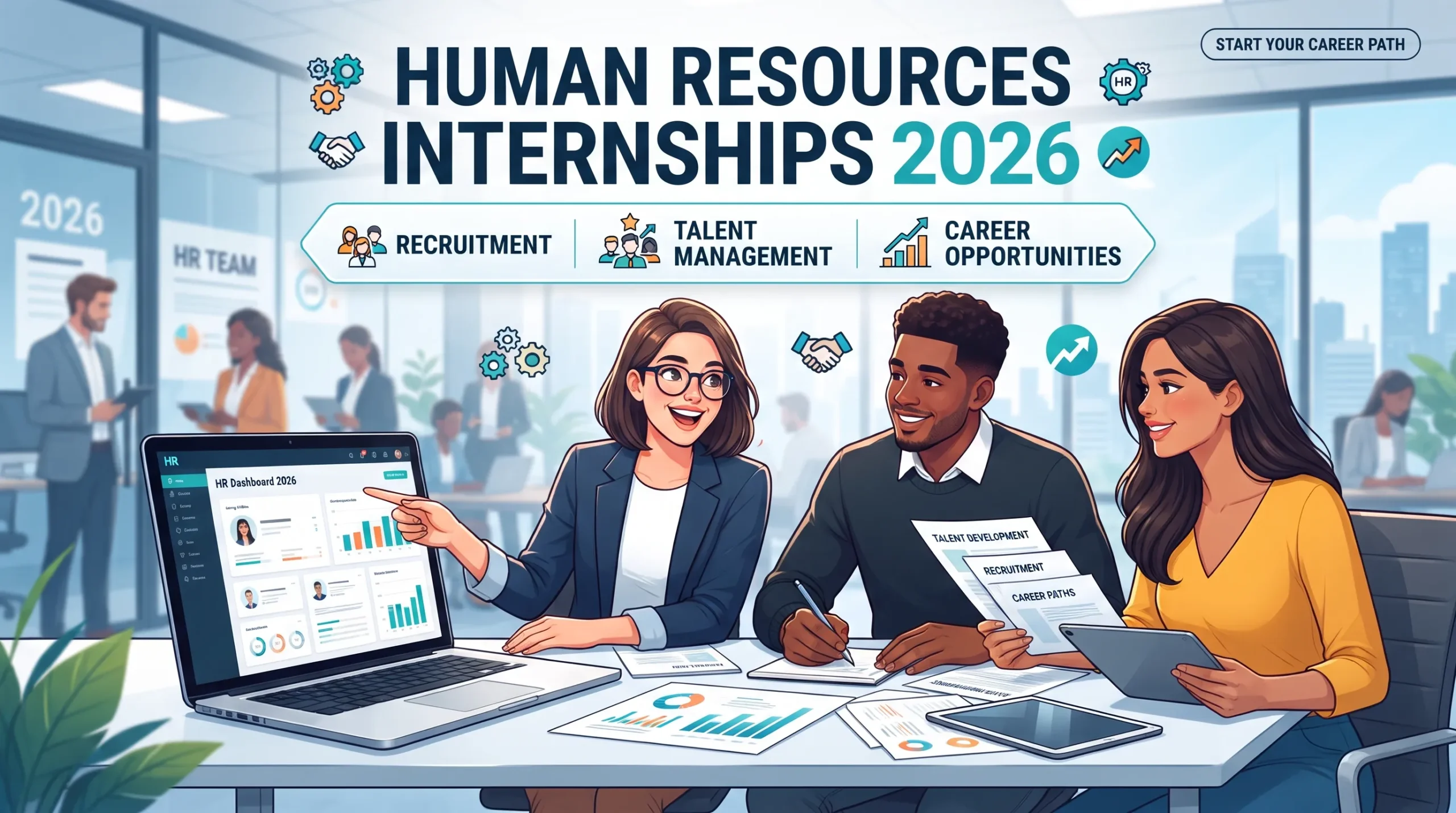
Human Resources (HR) has evolved far beyond hiring employees and maintaining personnel records. Modern HR teams are involved in recruitment, employee development, workplace culture, compensation, performance management, workforce planning, HR technology and organizational strategy.
For students and recent graduates, Human Resources Internships 2026 can provide practical exposure to these areas while helping build a foundation for long-term careers in recruitment, talent acquisition, people operations, employee relations and HR management.
Companies across technology, finance, healthcare, manufacturing, retail, hospitality, logistics and professional services regularly use internship programs to identify and develop future talent. An HR intern may work alongside recruiters, HR business partners, people operations specialists, learning and development teams or compensation professionals.
These internships can be particularly valuable for candidates studying human resources, business administration, psychology, management, organizational behavior, economics, communications or related subjects.
Whether you want to become a recruiter, HR generalist, talent acquisition specialist or people analytics professional, an internship can help you understand how organizations manage their most important resource: their people.
Human Resources Internship Overview
| Category | Details |
|---|---|
| Internship Field | Human Resources / People Operations |
| Common Roles | HR Intern, Recruiting Intern, Talent Acquisition Intern, People Operations Intern |
| Typical Areas | Recruitment, onboarding, employee relations, HR administration, training, analytics |
| Suitable For | Students, recent graduates and entry-level candidates |
| Education | HR, Business, Psychology, Management, Communications or related fields |
| Experience | Often entry-level; academic projects can be valuable |
| Work Format | On-site, hybrid or remote depending on employer |
| Career Paths | Recruiter, HR Coordinator, HR Generalist, Talent Specialist, HR Analyst |
| International Opportunities | Available depending on employer and work authorization |
Why Human Resources Internships Are in Demand
Organizations increasingly recognize that effective people management directly influences productivity, employee retention and business performance.
1. Growing Focus on Talent Acquisition
Companies compete for skilled employees in areas such as technology, finance, healthcare, engineering and business. HR professionals help organizations identify qualified candidates and build efficient recruitment processes.
Interns may therefore gain experience with job descriptions, candidate screening, interview scheduling, applicant tracking systems and recruitment communications.
2. Employee Retention Has Become a Priority
Hiring employees is only one part of HR. Organizations also need to keep talented workers engaged.
HR teams may work on employee surveys, career development programs, recognition initiatives, workplace culture and learning opportunities. Interns can gain exposure to these activities.
3. HR Is Becoming More Data-Driven
Modern HR departments increasingly use data to understand workforce trends.
An HR intern may help organize information about recruitment pipelines, employee turnover, training participation or workforce demographics. Candidates who combine HR knowledge with Excel, data analysis or visualization skills can stand out.
4. Expansion of People Operations
Many companies now use the term “People Operations” to describe broader employee-focused functions.
These teams can cover onboarding, employee experience, internal communications, workplace policies, engagement and organizational development.
5. HR Technology Is Transforming Workplaces
Applicant tracking systems, HR information systems, payroll platforms, employee engagement tools and analytics software have changed how HR departments operate.
Interns who understand technology and can learn new systems quickly can be valuable additions to HR teams.
Human Resources Internship Responsibilities
The responsibilities of an HR intern vary by company, department and level of responsibility.
Common tasks may include:
Recruitment and Talent Acquisition
- Reviewing applications and resumes
- Supporting candidate screening
- Scheduling interviews
- Communicating with applicants
- Preparing interview materials
- Updating applicant tracking systems
- Creating recruitment reports
- Supporting campus recruitment activities
Employee Onboarding
Interns may assist with new-hire onboarding by preparing documents, coordinating orientation sessions and helping new employees understand company procedures.
HR Administration
Administrative responsibilities can include maintaining employee records, organizing HR documents, preparing reports and updating internal databases.
Because HR involves sensitive employee information, interns are generally expected to demonstrate professionalism and discretion.
Employee Engagement
Interns may help organize employee surveys, internal events, recognition activities or workplace engagement initiatives.
Learning and Development
Some internships involve training and development. Tasks can include helping coordinate training sessions, tracking participation and preparing learning materials.
HR Analytics
Candidates with strong analytical skills may assist with:
- Employee data reporting
- Recruitment metrics
- Turnover analysis
- Workforce dashboards
- Training participation reports
- Headcount reporting
HR Projects
Interns may also contribute to special projects involving employee policies, process improvements, diversity initiatives, workplace culture or HR technology.
Human Resources Internship Salary Range
Compensation for HR internships varies considerably by country, employer, industry, academic level and working hours.
Some internships are paid hourly, while others provide a monthly stipend. Certain student programs may offer additional benefits such as transportation, meals, accommodation or relocation assistance.
A broad planning guide for paid internships can look like this:
| Region | Typical Compensation Structure |
|---|---|
| United States | Often paid hourly, with compensation varying significantly by employer and location |
| Canada | Commonly paid hourly or through a fixed internship salary |
| United Kingdom | Often hourly or monthly depending on the program |
| Europe | Compensation varies by country and internship structure |
| Australia | Paid opportunities may use hourly rates |
| Asia and Middle East | Stipends and monthly compensation are common in some programs |
| Remote Internships | Compensation depends on employer, location and employment arrangement |
There is no single worldwide salary for an HR intern. Candidates should always check the specific job advertisement for compensation details.
When comparing opportunities, look beyond salary. A lower-paying internship with strong mentorship, meaningful responsibilities and a recognized training program may provide greater long-term value than a higher-paying position with limited learning opportunities.
Employee Benefits
Human resources internships may offer benefits beyond direct compensation.
Depending on the employer, these can include:
- Professional mentoring
- HR training
- Career development programs
- Networking opportunities
- Flexible working arrangements
- Hybrid or remote work
- Employee discounts
- Transportation assistance
- Meal benefits
- Relocation support
- Housing assistance
- Access to company events
- Certificate of internship completion
- Potential consideration for future full-time employment
Benefits vary significantly, so applicants should review each internship description carefully.
Visa Sponsorship for International HR Internships
International students and graduates should pay particular attention to work authorization requirements.
An employer offering an internship does not automatically mean that visa sponsorship is available.
Depending on the country, international candidates may use student work authorization, internship programs, exchange or training arrangements, temporary work permits or other legal pathways.
Some multinational companies have established internship programs designed for students who already have permission to work in the country.
When searching for international HR internships, check:
- Whether international applicants are accepted.
- Whether the position requires existing work authorization.
- Whether the company provides sponsorship.
- Whether the internship must be connected to your academic program.
- Whether there are restrictions on internship duration.
- Whether the position is paid or unpaid.
- Whether relocation assistance is available.
Always verify immigration requirements through official government sources and the employer’s official career information before making travel or financial commitments.
Eligibility Requirements
Human resources internships are generally designed for students and early-career candidates.
Typical requirements may include:
- Enrollment in a university or college program
- Recent graduation in some cases
- Interest in HR or business
- Strong communication skills
- Basic computer proficiency
- Ability to work with confidential information
- Good organizational skills
- Attention to detail
- Ability to work independently and within a team
Some employers may specifically seek students studying:
- Human Resources Management
- Business Administration
- Psychology
- Organizational Psychology
- Management
- Communications
- Economics
- Sociology
- Industrial Relations
- Marketing or related business disciplines
Requirements differ between companies, so candidates should not assume that a specific degree is mandatory for every HR internship.
Required Skills
Developing practical HR skills before applying can significantly improve your competitiveness.
Communication
HR professionals communicate with applicants, employees, managers and external partners. Strong written and verbal communication is therefore essential.
Organization
Recruitment and employee administration involve multiple deadlines, interviews, documents and projects. Strong organizational ability is highly valuable.
Microsoft Excel
Excel remains useful for HR reporting, employee data, recruitment tracking and basic analysis.
Useful skills include:
- Sorting and filtering
- Formulas
- Pivot tables
- Data cleaning
- Basic charts
- Spreadsheet organization
HR Technology
Familiarity with applicant tracking systems, HR information systems and online recruitment platforms can be beneficial.
Analytical Thinking
HR is increasingly connected to business data. Understanding how to interpret workforce metrics can help candidates move toward HR analytics and strategic HR roles.
Confidentiality
HR professionals often work with private employee and candidate information. Interns must understand the importance of confidentiality and professional conduct.
Problem-Solving
HR teams frequently handle workplace questions, recruitment challenges and process issues. The ability to approach problems logically is useful in almost every HR position.
Education and Experience
Many HR internships do not require extensive professional experience.
Employers may instead look for evidence that a candidate understands business, communication and people-related concepts.
Relevant academic coursework can include:
- Human resource management
- Organizational behavior
- Recruitment and selection
- Employment relations
- Business management
- Psychology
- Statistics
- Business analytics
Students can also strengthen their applications through university projects.
For example, a student could create a sample recruitment dashboard, conduct an employee engagement survey as an academic project or develop a mock onboarding program.
These projects demonstrate initiative even when the candidate has not previously worked in an HR department.
Available Locations
Human resources internships can be found across major business and employment markets.
United States
Large companies, technology firms, financial institutions, healthcare organizations and professional services companies frequently maintain structured internship programs.
Canada
Canadian employers offer opportunities in recruitment, people operations, employee services and business administration.
United Kingdom
The UK has a broad HR sector, with internship opportunities connected to recruitment, employee development and people operations.
Europe
Countries such as Germany, France, the Netherlands, Ireland and other European markets provide opportunities across multinational companies and local organizations.
Australia
HR internships can be found across business services, retail, healthcare, technology, education and other industries.
Singapore
Singapore’s role as an international business hub creates opportunities connected to regional HR operations, recruitment and talent management.
United Arab Emirates
Dubai and Abu Dhabi host many multinational companies and large employers, creating opportunities in recruitment, administration, employee services and people operations.
Remote Internships
Some employers offer remote or hybrid HR internships, particularly for recruitment, HR administration, employee communications and analytics.
However, remote does not necessarily mean that candidates can work from any country. Employment and tax regulations can still apply.
How to Apply for Human Resources Internships in 2026
A focused application strategy can improve your chances of receiving interviews.
Step 1: Choose Your HR Specialization
Decide which area interests you most:
- Recruitment
- Talent acquisition
- People operations
- Employee relations
- Learning and development
- HR analytics
- Compensation and benefits
- HR administration
Step 2: Build an HR-Focused Resume
Your resume should highlight relevant coursework, projects, technical skills, leadership experience and communication abilities.
Avoid sending exactly the same resume to every employer.
Step 3: Highlight Transferable Experience
Part-time jobs, student organizations, volunteer work and university projects can demonstrate skills relevant to HR.
For example, organizing a university event can demonstrate coordination and communication skills.
Step 4: Search Official Career Pages
Look for internships through company career websites, university career centers, reputable employment platforms and professional networking sites.
Always verify the employer before providing personal information.
Step 5: Prepare for Interviews
Common HR internship interview topics include:
- Why are you interested in HR?
- Why do you want to work for our company?
- How would you handle confidential information?
- Tell us about a time you solved a problem.
- How would you handle multiple deadlines?
- What interests you about recruitment?
- How comfortable are you with Excel or data?
Prepare examples from university, volunteer work, previous employment or personal projects.
Tips to Increase Your Hiring Chances
Learn Excel
Strong spreadsheet skills can help you qualify for HR operations and analytics internships.
Improve Your LinkedIn Profile
Maintain a professional profile that clearly communicates your education, interests and skills.
Build a Small HR Portfolio
A portfolio can include:
- Recruitment funnel dashboard
- Sample job description
- Employee onboarding plan
- Employee engagement survey
- HR analytics project
- Workforce planning exercise
Research Every Employer
Understand the company’s products, industry, culture and workforce before an interview.
Apply Early
Many competitive internship programs recruit months before the actual start date.
Network Professionally
University career events, alumni networks and professional communities can help you discover opportunities that may not be widely advertised.
Demonstrate Business Understanding
HR is a business function. Show that you understand how recruitment, employee retention and workforce planning can influence company performance.
International candidates may encounter several types of immigration or work authorization arrangements depending on the destination country.
Possible categories include:
- Student work authorization
- Internship or training permits
- Exchange visitor programs
- Temporary employment permits
- Graduate work authorization
- Youth mobility programs
- Employer-sponsored work visas
The appropriate route depends entirely on the candidate’s nationality, education, destination country, internship type and employer.
Visa rules can also change. Applicants should therefore confirm the latest requirements through official immigration authorities before accepting an international internship.
Cost of Living for International Interns
Relocating for an internship can involve substantial costs.
Before accepting an overseas position, estimate:
- Rent or accommodation
- Food
- Local transportation
- Health or travel insurance
- Visa fees
- Flights
- Utilities
- Mobile and internet services
- Emergency expenses
- Local taxes where applicable
Major business centers can have significantly higher living costs than smaller cities.
A good approach is to calculate your expected monthly income and compare it with realistic monthly expenses before accepting an offer.
If an employer provides accommodation, meals, transportation or relocation assistance, the overall value of the internship may be considerably higher than the advertised salary alone.
FAQs About Human Resources Internships 2026
1. What is a human resources internship?
A human resources internship is an entry-level training opportunity where students or recent graduates gain practical experience in areas such as recruitment, onboarding, employee relations, HR administration, training and people analytics.
2. Who can apply for HR internships in 2026?
Students, recent graduates and early-career candidates can apply. Common academic backgrounds include HR, business, psychology, management, communications and related disciplines.
3. Do HR internships require previous experience?
Many internships are designed for candidates with limited professional experience. University projects, volunteer work, leadership activities and part-time jobs can demonstrate relevant transferable skills.
4. Can international students apply for HR internships?
Yes, international students may be eligible for some internships, but they must meet the employer’s eligibility requirements and have the required legal authorization to work.
5. Do HR internships provide visa sponsorship?
Some employers may support international candidates, but visa sponsorship is not guaranteed. Many internships require applicants to already have authorization to work in the relevant country.
6. What skills are needed for an HR internship?
Communication, organization, attention to detail, confidentiality, teamwork, problem-solving and basic data skills are valuable. Excel and familiarity with HR technology can provide an additional advantage.
7. What can I do after an HR internship?
An internship can lead toward roles such as HR Coordinator, Recruiter, Talent Acquisition Specialist, HR Generalist, People Operations Specialist, Learning and Development Coordinator or HR Analyst.
8. Can I get a remote HR internship?
Yes, some employers offer remote or hybrid internships, particularly in recruitment, HR administration, employee communications and HR analytics. Location and work authorization rules may still apply.
9. What should I include on my HR internship resume?
Include your education, relevant coursework, HR projects, technical skills, communication experience, leadership activities, volunteer work and any previous employment that demonstrates transferable skills.
10. Are HR internships paid?
Many internships are paid, but compensation varies by country, employer and program. Some programs provide hourly pay, monthly stipends or other benefits, while certain internships may have different compensation arrangements.
Final Thoughts
Human Resources Internships 2026 can provide an important starting point for students and graduates interested in recruitment, talent management, people operations and organizational development.
The strongest candidates are not necessarily those with the longest resumes. Employers often value communication, curiosity, organization, professionalism, analytical ability and a genuine interest in helping organizations manage and develop their workforce.
Building practical skills in Excel, HR technology, recruitment processes and data analysis can make your profile more competitive. Academic projects and leadership experiences can also help demonstrate your capabilities when you have limited professional experience.
For international candidates, the most important consideration is work authorization. An attractive internship does not automatically provide visa sponsorship, so immigration requirements should always be checked before making relocation plans.
With targeted applications, strong preparation and a clear understanding of the HR specialization you want to pursue, an internship in 2026 can become a valuable first step toward a global career in human resources.