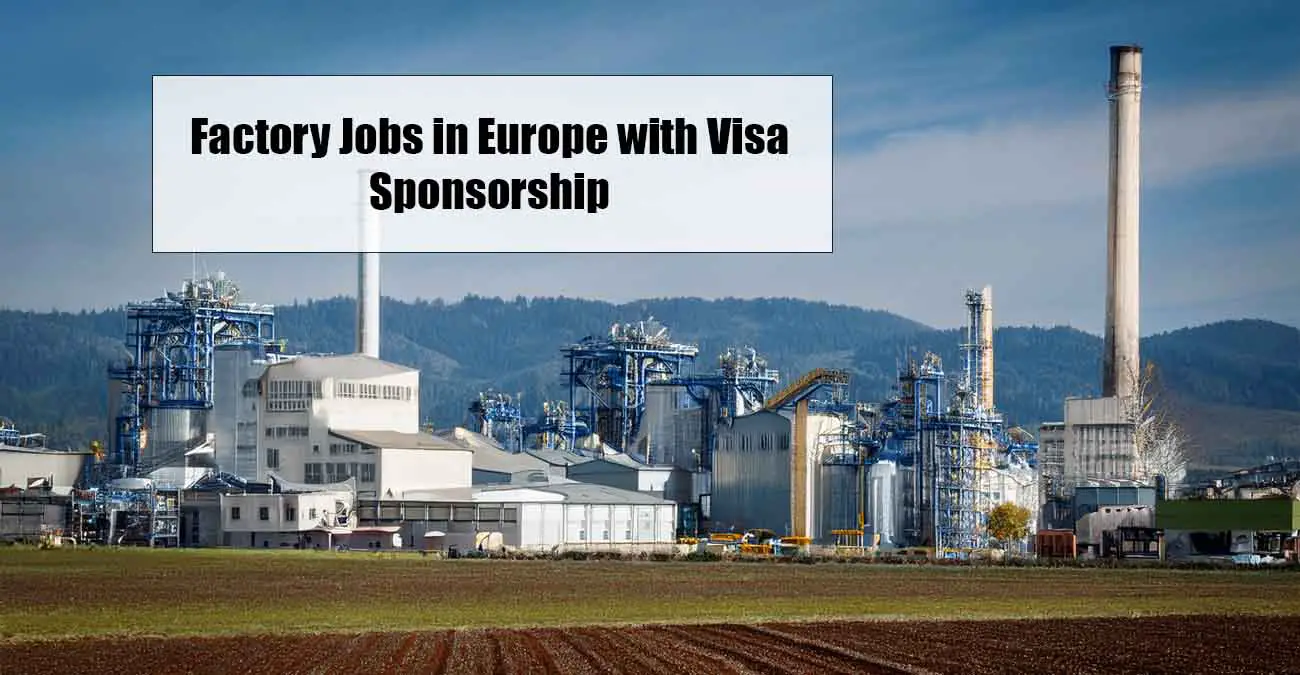
Europe remains one of the strongest industrial regions in the world, driven by large-scale manufacturing, automation, and export-focused production. In 2026, factory jobs across countries such as Germany, Poland, Netherlands, France, and Italy are opening up for international workers due to ongoing labor shortages in manufacturing and logistics.
To fill these gaps, many European employers are offering factory jobs with visa sponsorship, making it possible for foreign workers to legally relocate and work in Europe. These roles are suitable for both beginners and skilled professionals, offering stable income, strong labor protection, and long-term career opportunities.
For job seekers aiming to build a better future abroad, factory work in Europe continues to be one of the most accessible and reliable pathways in 2026.
Job Details
| Category | Details |
|---|---|
| Job Title | Factory Worker / Machine Operator / Warehouse Staff / Technician |
| Job Location | Europe (Germany, Poland, Netherlands, France, Italy, etc.) |
| Industry | Manufacturing / Production / Logistics |
| Job Type | Full-Time / Contract |
| Experience Required | Not required for entry-level roles |
| Education Required | Not required for labor roles |
| Visa Sponsorship | Yes |
| Accommodation | Varies by employer |
| Age Requirement | 22+ years |
| Salary Range | EUR 1,800 – EUR 3,500 per month |
Requirements
Requirements depend on job type, but most factory roles in Europe are accessible:
Entry-Level Workers:
- No formal education required
- No prior experience needed
- Basic physical fitness
- Ability to follow instructions and safety rules
Skilled Workers:
- Diploma or degree in engineering, manufacturing, or technical field
- 1–3 years of relevant experience
- Knowledge of machinery or production systems
General Requirements:
- Basic English (or local language advantage)
- Willingness to work shifts (day/night rotation)
- Ability to work in a fast-paced environment
- Clean background and valid passport
Job Responsibilities
Factory roles in Europe vary by position, but common duties include:
Production Line Work:
- Assembling and packaging products
- Operating production machinery
- Monitoring product quality and output
Machine Operation:
- Running industrial equipment safely
- Performing basic maintenance checks
- Reporting technical issues
Warehouse & Logistics:
- Loading and unloading goods
- Managing inventory and stock control
- Organizing shipments and storage areas
Quality Control:
- Inspecting finished products
- Removing defective items
- Ensuring compliance with company standards
Supervisory Roles:
- Managing production teams
- Ensuring safety and efficiency on the floor
- Coordinating workflow and reporting performance
Benefits
Factory jobs in Europe offer strong employment benefits compared to many other regions:
- Visa sponsorship and legal work authorization
- Competitive hourly wages
- Paid annual leave and overtime pay
- Health insurance under EU labor systems
- Safe and regulated working environment
- Training and skill development opportunities
- Possibility of long-term contracts and residency pathways
- Multicultural workplace environment
💡 Many employers also offer shift allowances and performance bonuses.
Who Can Apply
Factory jobs in Europe are open to international applicants from:
- Asia: Pakistan, India, Bangladesh, Nepal, Sri Lanka, Philippines
- Africa: Nigeria, Ghana, Kenya, Sudan, Cameroon
- Latin America: Mexico, Jamaica, Trinidad & Tobago, Grenada, Barbados
- Middle East: UAE, Saudi Arabia, Jordan, Egypt
- Eastern Europe and other regions
Both unskilled and skilled workers are encouraged to apply depending on job requirements.
Salary
In 2026, factory salaries in Europe vary based on country and role:
- General Factory Workers: EUR 10 – EUR 12 per hour
- Machine Operators: EUR 12 – EUR 15 per hour
- Skilled Technicians / Inspectors: EUR 14 – EUR 18 per hour
- Supervisors / Engineers: EUR 18 – EUR 25 per hour
👉 Average monthly income ranges from EUR 1,800 to EUR 3,500, with higher earnings in countries like Germany and the Netherlands.
How to Apply
The application process is simple and structured:
- Prepare an updated CV highlighting skills and work experience
- Gather required documents (passport, certificates, experience letters if available)
- Search job openings on European recruitment platforms or employer portals
- Apply directly to companies offering visa sponsorship
- Attend online interviews if shortlisted
- Receive job offer and sponsorship documents
- Apply for work visa through the designated embassy
- Travel and start employment in Europe
💡 A clean CV and clear willingness to relocate significantly improves selection chances.
Conclusion
In 2026, factory jobs in Europe with visa sponsorship remain one of the most reliable opportunities for international job seekers. With strong labor laws, competitive salaries, and structured working environments, Europe offers both financial stability and long-term career growth.
Whether you are starting as a general production worker or applying for skilled technical roles, Europe’s manufacturing sector provides thousands of opportunities across multiple industries.
For anyone seeking a secure overseas job with real growth potential, Europe’s factory industry is a strong and practical choice in 2026.