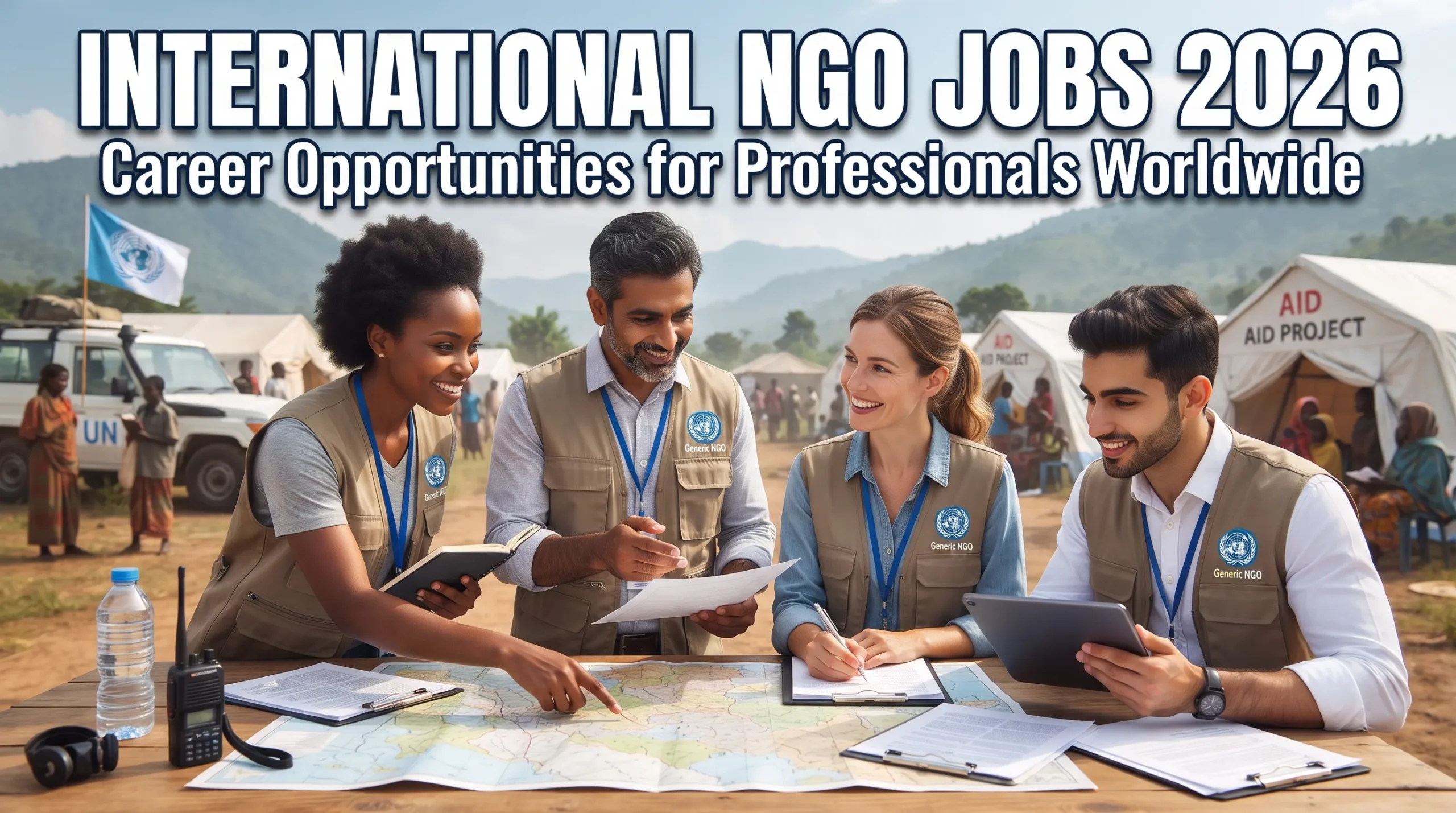
International NGO jobs offer professionals an opportunity to build meaningful careers while contributing to humanitarian assistance, international development, public health, education, human rights, environmental protection and emergency response.
In 2026, NGOs and international organizations continue to recruit professionals across a wide range of disciplines. Current international-sector vacancies include positions in humanitarian affairs, environmental health, WASH, finance, programme management, communications, epidemiology, logistics and public policy. Recent vacancy listings also show opportunities with organizations such as the International Rescue Committee and the Clinton Health Access Initiative in different regions.
The international NGO sector is not limited to people with degrees in international relations or development studies. Organizations need accountants, IT specialists, doctors, engineers, project managers, communications professionals, lawyers, procurement specialists, monitoring and evaluation experts, human resources professionals and logistics staff.
For professionals hoping to work internationally, this creates several possible career paths.
However, getting an NGO job abroad requires more than submitting a CV. Candidates need to understand the difference between international and national positions, determine whether they meet the experience requirements, prepare a targeted application and verify whether a particular organization provides relocation or work-permit support.
This guide explains the major international NGO career opportunities available in 2026, the skills employers look for, typical job categories, eligibility requirements, application strategies and ways to build a long-term career in international development.
International NGO Jobs 2026: Job Overview
| Category | Details |
|---|---|
| Sector | International development, humanitarian assistance and social impact |
| Target applicants | Students, graduates and experienced professionals |
| Common fields | Programme management, health, education, finance, logistics, communications, protection and technology |
| Work locations | Africa, Asia, Europe, Middle East, Latin America and North America |
| Work arrangements | Field-based, office-based, hybrid and some remote/consultancy roles |
| Education | Depends on the position |
| Experience | Entry-level to senior management |
| Languages | English is widely used; additional languages can be valuable |
| Contracts | Fixed-term, temporary, consultancy, internship and other arrangements |
| Visa support | Depends on employer, position and country |
| Application method | Usually through the organization’s official careers portal |
Why Are International NGO Jobs in Demand?
NGOs operate across many areas where governments, communities and international partners require specialized expertise.
Humanitarian organizations may need professionals to respond to emergencies, while development organizations may work on long-term programs involving health, education, food security, climate resilience or economic development.
The breadth of this work means NGO recruitment is not limited to one profession.
Current international vacancy databases show positions ranging from environmental health and WASH management to malaria financing, epidemiology and emergency finance.
The United Nations system also demonstrates the wide range of professional functions used in international development. Its current listings include programme management, political affairs, human rights, economics, legal affairs, finance, logistics and environmental positions.
This means professionals can enter the international development sector through several different career routes.
Types of International NGO Jobs
Humanitarian Jobs
Humanitarian work is one of the most recognizable areas of NGO employment.
Professionals may work on:
- Emergency response
- Refugee assistance
- Food security
- Shelter
- Water and sanitation
- Protection
- Camp coordination
- Disaster response
- Emergency health
- Cash assistance
Typical job titles include:
- Humanitarian Programme Officer
- Emergency Response Manager
- Humanitarian Affairs Officer
- Protection Officer
- Emergency Coordinator
- Field Coordinator
- Humanitarian Programme Manager
These positions can involve working in challenging environments, so employers often value previous field experience.
International Development Jobs
Development organizations focus on longer-term improvements in areas such as:
- Poverty reduction
- Education
- Economic development
- Governance
- Gender equality
- Agriculture
- Climate resilience
- Health systems
- Community development
Common positions include:
- Programme Officer
- Development Specialist
- Project Manager
- Programme Coordinator
- Policy Adviser
- Development Consultant
- Monitoring and Evaluation Specialist
Public Health and Medical NGO Jobs
Healthcare professionals are essential to many international organizations.
Potential roles include:
- Public Health Specialist
- Epidemiologist
- Health Programme Manager
- Medical Coordinator
- Nutrition Specialist
- Health Systems Adviser
- Community Health Officer
Recent international-sector vacancies include epidemiology and malaria-related positions in Africa and Asia, demonstrating the demand for specialized public-health expertise.
Education Jobs
International NGOs and development organizations also recruit professionals working in:
- Education policy
- Teacher training
- Early childhood development
- Education in emergencies
- Curriculum development
- Youth programs
- Skills development
Possible job titles include:
- Education Specialist
- Education Programme Manager
- Education Officer
- Training Coordinator
- Child Development Specialist
Finance and Accounting Jobs
NGOs require strong financial management because donor funding must be carefully monitored and reported.
Finance professionals may work as:
- Finance Officer
- Finance Manager
- Grants Finance Specialist
- Accountant
- Budget Analyst
- Financial Controller
- Compliance Officer
Experience with donor-funded projects can be particularly valuable.
Logistics and Supply Chain Jobs
Humanitarian operations depend heavily on effective logistics.
Organizations may recruit:
- Logistics Officers
- Supply Chain Managers
- Procurement Specialists
- Fleet Managers
- Warehouse Officers
- Operations Managers
- Procurement Officers
These professionals can be especially important during emergency responses where food, medicines, equipment and other supplies must reach affected populations quickly.
Communications and Media Jobs
NGOs need professionals who can communicate their work to:
- Donors
- Governments
- Communities
- Journalists
- Partners
- The general public
Positions can include:
- Communications Officer
- Communications Manager
- Digital Communications Specialist
- Media Officer
- Content Specialist
- Public Information Officer
- Advocacy Specialist
Strong writing, photography, video, social media and storytelling skills can be useful.
Programme Management Careers
Programme management is one of the broadest career categories in international NGOs.
A programme professional may coordinate an entire project from planning through implementation and evaluation.
Typical responsibilities include:
- Developing work plans
- Managing budgets
- Coordinating partners
- Tracking project progress
- Preparing donor reports
- Managing risks
- Supervising teams
- Monitoring results
Possible titles include:
- Programme Assistant
- Programme Officer
- Programme Coordinator
- Programme Manager
- Senior Programme Manager
- Programme Director
Current international-sector vacancies include Programme Specialist and Programme Management Officer roles, demonstrating the range of career levels available.
Monitoring, Evaluation and Learning Jobs
Monitoring and evaluation, often called M&E or MEL, is another major NGO career path.
Professionals in this area measure whether programs are achieving their intended results.
Responsibilities can include:
- Designing indicators
- Collecting data
- Conducting surveys
- Analyzing results
- Preparing reports
- Evaluating projects
- Building monitoring systems
- Supporting evidence-based decisions
Relevant backgrounds include:
- Statistics
- Economics
- Social sciences
- Public policy
- Data science
- Development studies
Strong Excel, Power BI, SQL, statistical software or research skills can make candidates more competitive.
Human Rights and Protection Careers
NGOs working in human rights may recruit professionals specializing in:
- Human rights
- Refugee protection
- Gender equality
- Child protection
- Migration
- Legal assistance
- Advocacy
- International law
Potential positions include:
- Human Rights Officer
- Protection Officer
- Legal Adviser
- Advocacy Manager
- Gender Specialist
- Child Protection Specialist
The wider international system currently includes human-rights and political-affairs positions, reflecting the continued need for professionals in these areas.
Environmental and Climate NGO Jobs
Climate change and environmental sustainability have become increasingly important areas of international development.
Professionals may work in:
- Climate adaptation
- Renewable energy
- Environmental policy
- Conservation
- Water management
- Sustainable agriculture
- Climate finance
- Disaster-risk reduction
Possible roles include:
- Environmental Specialist
- Climate Change Adviser
- Sustainability Manager
- WASH Specialist
- Environmental Programme Officer
- Climate Policy Analyst
Current international vacancies include environmental health, WASH and environmental consultancy positions.
Technology and Digital NGO Careers
International NGOs increasingly rely on technology for:
- Data collection
- Digital payments
- Programme monitoring
- Cybersecurity
- Communications
- Information management
- Geographic information systems
Technology professionals can therefore explore roles such as:
- IT Officer
- Information Management Specialist
- Data Analyst
- GIS Specialist
- Cybersecurity Specialist
- Digital Transformation Adviser
- Software Developer
A technology background combined with knowledge of international development can be particularly useful.
International NGO Jobs for Entry-Level Professionals
Breaking into the NGO sector can be difficult because many international positions request previous experience.
However, entry-level opportunities do exist.
Search for:
- Programme Assistant
- Project Assistant
- Administrative Assistant
- Finance Assistant
- Communications Assistant
- Research Assistant
- Data Assistant
- Logistics Assistant
- Monitoring Assistant
Internships and volunteer experience can also help candidates build sector-specific experience.
The United Nations, for example, lists internships separately from professional positions and provides opportunities across multiple departments.
International NGO Jobs for Experienced Professionals
Experienced professionals can target positions such as:
- Programme Manager
- Country Director
- Regional Adviser
- Technical Specialist
- Finance Manager
- Operations Manager
- Humanitarian Coordinator
- Monitoring and Evaluation Manager
- Senior Policy Adviser
- Emergency Response Manager
At senior levels, employers usually expect demonstrated leadership, technical expertise and experience managing budgets, teams or complex programs.
Educational Requirements
There is no single degree required for international NGO employment.
Depending on the position, employers may prefer qualifications in:
- International development
- International relations
- Public health
- Economics
- Political science
- Law
- Social sciences
- Engineering
- Environmental science
- Business administration
- Finance
- Communications
- Information technology
For technical positions, a specialized degree may be essential.
For programme management roles, relevant education combined with practical experience may be more important than having one specific degree.
Required Skills for NGO Careers
Successful NGO professionals generally combine technical knowledge with strong interpersonal skills.
Important skills include:
Communication
Professionals must communicate with colleagues, donors, government officials and local communities.
Project Management
Understanding timelines, budgets, risks and deliverables is valuable for many NGO positions.
Research and Analysis
The ability to interpret information and turn data into useful recommendations is highly relevant.
Cross-Cultural Communication
International organizations operate across different cultures, languages and social environments.
Teamwork
NGO projects often involve multiple organizations and professional disciplines.
Adaptability
Field environments can change quickly, particularly during humanitarian emergencies.
Digital Skills
Excel, data analysis, project-management platforms and digital communication tools are increasingly useful.
International NGO Salary Expectations
NGO salaries vary considerably.
Factors affecting compensation include:
- Organization
- Country
- Job level
- Technical specialization
- Contract type
- Local versus international recruitment
- Duty station
- Professional experience
International positions may have different compensation structures from locally recruited jobs.
Because salary scales vary significantly between organizations, applicants should not rely on generic online salary claims.
Instead, carefully review the official vacancy and employment conditions.
Some international organizations publish salary scales or provide detailed information about benefits during recruitment.
Employee Benefits
Depending on the organization and contract, international NGO employees may receive benefits such as:
- Health insurance
- Pension contributions
- Paid annual leave
- Sick leave
- Travel assistance
- Relocation support
- Accommodation assistance
- Security support
- Family benefits
- Professional development
- Hardship allowances
Not every vacancy includes every benefit.
Field positions may have additional arrangements because employees can be required to work in difficult or remote locations.
Visa Sponsorship and International NGO Jobs
Professionals searching for international NGO jobs with visa sponsorship should understand that immigration support varies by position and organization.
An international NGO may:
- Sponsor an eligible work permit
- Provide documentation for a visa application
- Offer relocation support
- Recruit internationally
- Recruit only candidates who already have work authorization
Therefore, do not assume that every vacancy marked “international” provides visa sponsorship.
Read the vacancy carefully for phrases such as:
- International candidates welcome
- International recruitment
- Relocation support
- Work permit support
- Visa sponsorship
- Candidates must have existing work authorization
The United Nations also warns applicants about fraudulent job advertisements and states that it does not request payment during the application and review process.
This is an important warning for anyone searching for international NGO jobs online.
How to Find Legitimate International NGO Jobs
Start With Official Career Websites
The safest approach is to apply directly through the organization’s official website.
The United Nations directs applicants to its Careers Portal for professional positions and advises candidates to visit individual UN agencies for their vacancies.
You can also monitor established international-development job platforms.
UNjobnet, for example, currently aggregates vacancies across the UN, NGO and international development sectors and allows users to browse by occupation, organization and duty station.
Search by Job Function
Instead of searching only for “NGO jobs,” use specific terms.
Examples:
- International programme officer jobs 2026
- Humanitarian jobs abroad 2026
- International development jobs
- NGO project manager jobs
- International health jobs
- NGO finance jobs
- Human rights jobs abroad
- NGO communications jobs
- International logistics jobs
- Remote NGO jobs 2026
This can produce more relevant results.
How to Apply for International NGO Jobs
Step 1: Identify Suitable Positions
Choose vacancies that match your education, experience and technical skills.
Step 2: Read the Full Job Description
Pay particular attention to:
- Required qualifications
- Years of experience
- Language requirements
- Nationality restrictions
- Duty station
- Contract duration
- Closing date
- Work authorization
Step 3: Customize Your CV
Do not send the same CV to every organization.
Match your experience with the vacancy.
If an employer requests programme management experience, highlight:
- Projects managed
- Budgets handled
- Teams supervised
- Donor reporting
- Results achieved
Step 4: Write a Targeted Cover Letter
Explain why your experience fits the position.
Avoid generic statements such as:
“I am hardworking and passionate.”
Instead, connect your experience directly to the organization’s requirements.
Step 5: Submit Through the Official Portal
Avoid unofficial recruiters asking for application fees.
Step 6: Prepare for Interviews
NGO interviews may assess:
- Technical skills
- Competency-based examples
- Problem solving
- Leadership
- Communication
- Ethical judgment
- Understanding of the organization’s mission
Tips to Increase Your Hiring Chances
Gain Relevant Experience
Volunteer work can be useful, but try to gain experience that demonstrates actual responsibilities.
Examples include:
- Managing a community project
- Collecting research data
- Supporting beneficiaries
- Preparing donor reports
- Organizing training
- Managing social media campaigns
- Coordinating volunteers
Learn Monitoring and Evaluation
MEL skills can be useful across many development programs.
Improve Your English
Strong written and spoken English can be valuable for international organizations.
Additional languages can provide an advantage depending on the region.
Develop Technical Expertise
A specialized skill can differentiate you from general applicants.
For example:
Public health + data analysis
Engineering + climate policy
Finance + donor compliance
Communications + digital analytics
These combinations can be particularly useful.
Remote International NGO Jobs
Remote and hybrid opportunities exist, especially for:
- Consultants
- Researchers
- Communications professionals
- Data analysts
- Technical specialists
- Digital professionals
Current UN-system vacancy listings include consultancy roles with remote or hybrid arrangements, although some are restricted to specific nationalities or locations.
Therefore, “remote” does not necessarily mean that applicants from every country are eligible.
Always check the location and nationality requirements.
International NGO Jobs by Region
Africa
Common areas include:
- Public health
- Food security
- Education
- WASH
- Agriculture
- Humanitarian response
- Climate resilience
Asia
Potential sectors include:
- Health
- Education
- Disaster response
- Economic development
- Climate adaptation
- Human rights
Middle East
Professionals may find opportunities involving:
- Humanitarian assistance
- Refugee response
- Protection
- Education
- Health
- Reconstruction
Europe
European NGO and international-development careers can include:
- Policy
- Advocacy
- Human rights
- Research
- Finance
- Programme management
- Climate policy
Latin America
Potential areas include:
- Public health
- Indigenous rights
- Environmental protection
- Education
- Migration
- Economic development
International NGO Jobs for International Applicants
Professionals living outside the country where a position is located should carefully distinguish between international recruitment and local recruitment.
A vacancy may specify:
International candidates
or:
Open to nationals of the country only.
Current international-sector listings demonstrate that both types exist. For example, some vacancies are explicitly limited to nationals of a particular country, while other international consultancy or professional positions are open under different recruitment arrangements.
Always read the eligibility section before applying.
Common Mistakes to Avoid
Applying for Jobs Above Your Experience Level
If a position requires eight years of specialized experience, applying with one year of experience is unlikely to be productive.
Ignoring Nationality Restrictions
Some positions are specifically reserved for nationals of the duty station country.
Sending a Generic CV
Tailoring your application is much more effective.
Paying for a Job
Legitimate international organizations do not require applicants to pay money simply to submit an application.
The United Nations specifically warns about fraudulent recruitment offers and says it does not request payment during its application or review process.
A post on Facebook, WhatsApp or another social platform may be genuine, but always verify it against the organization’s official website.
Frequently Asked Questions
1. What are international NGO jobs?
International NGO jobs are professional positions with non-governmental organizations working across borders in areas such as humanitarian assistance, development, health, education, human rights and environmental protection.
2. Can foreigners apply for international NGO jobs?
Yes. Many international positions accept candidates from different nationalities, although individual vacancies can have nationality or work-authorization restrictions.
3. What qualifications do I need for an NGO job?
Requirements vary by position. Relevant degrees may include international development, public health, economics, law, engineering, finance, communications, social sciences and information technology.
4. Can I get an NGO job without previous NGO experience?
Yes, particularly for entry-level positions. However, volunteer work, internships, research, community projects or related professional experience can improve your chances.
5. Do international NGOs provide visa sponsorship?
Some international positions may provide immigration or relocation support, but sponsorship is not guaranteed. Applicants should check the specific vacancy and employment conditions.
6. Are international NGO jobs paid?
Yes. Professional NGO positions are generally paid, but salary and benefits depend on the organization, role, contract and location.
7. Are there remote NGO jobs in 2026?
Yes. Some organizations advertise remote and hybrid consultancy or professional positions. However, remote vacancies may have location or nationality restrictions.
8. What are the best fields for international NGO careers?
Strong career areas include humanitarian assistance, public health, programme management, monitoring and evaluation, finance, logistics, education, communications, human rights, climate and technology.
9. Where can I find legitimate NGO jobs?
Start with official NGO career websites, United Nations career portals and established international-development job platforms. The UN advises applicants to use its Careers Portal and individual agency websites for vacancies.
10. Do international NGO jobs require English?
Many international positions require professional English. Additional languages can be valuable, particularly for field-based positions.
Final Thoughts
International NGO jobs in 2026 offer career opportunities for professionals with very different backgrounds.
You do not have to be an international-relations graduate to work in the sector. NGOs need professionals in healthcare, engineering, finance, technology, logistics, communications, education, research, law, environmental science and programme management.
The best way to approach an international NGO career is to identify your strongest professional skill and then connect it to an international development problem.
For example:
A data analyst can work on public-health programs.
An accountant can manage donor-funded projects.
An engineer can contribute to water, infrastructure or energy programs.
A communications professional can support humanitarian campaigns.
A public-health specialist can work on disease prevention and health systems.
The international sector also has opportunities at different career stages, from assistants and interns to technical specialists, programme managers and senior leadership positions. Current international vacancy listings demonstrate this broad range of professional functions and geographic locations.
If you are applying internationally, always check three things before submitting an application:
Eligibility — Do you meet the requirements?
Location — Is the position open to international candidates?
Work authorization — Can you legally work in that country, and does the organization provide support if required?
Finally, be careful with fraudulent recruitment advertisements. Never pay someone simply because they promise an NGO job or visa. Verify every opportunity through the organization’s official careers page before sharing sensitive documents or making any payment. The United Nations specifically warns applicants about fake recruitment offers.
A successful NGO career is usually built gradually through relevant education, practical experience, technical skills, networking and targeted applications. With the right combination of expertise and international exposure, professionals can build careers that are both financially sustainable and connected to meaningful global work.